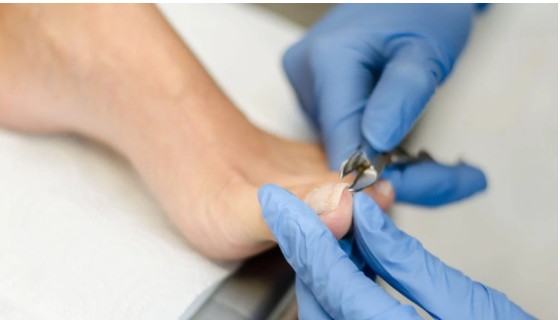
Ingrown Toenail Treatment in Alexandria, VA
An ingrown toenail can turn every step into a painful one and may lead to infection if left untreated. At Landmark Foot & Ankle Center in Alexandria, VA , our podiatrists provide quick, gentle in-office ingrown toenail treatment that relieves pain and helps prevent the problem from coming back.
Book OnlineWhat Is an Ingrown Toenail?
An ingrown toenail occurs when the corner or side edge of a nail curves down and grows into the soft skin next to it. The big toe is affected most often. As the nail presses into the skin, it causes tenderness, redness, and swelling, and the broken skin can allow bacteria to enter and cause an infection.
Symptoms of an Ingrown Toenail
- Pain and tenderness along one or both sides of the nail
- Red, swollen, or warm skin around the toe
- Drainage, pus, or a foul odor, which can signal infection
- Overgrown, irritated skin along the nail border
- Pain when wearing shoes or when the toe is touched
What Causes Ingrown Toenails?
Common causes include cutting nails too short or rounding the corners, wearing shoes that crowd the toes, injury to the toe, and an inherited nail shape that curves inward. Teens, athletes, and people with naturally thick or curved nails are especially prone. Fungal infections can also thicken nails and make them more likely to grow into the skin. If you have thick or discolored nails, ask about our Lunula Laser toenail fungus treatment.
Why Ingrown Toenails Are Serious for People With Diabetes
If you have diabetes, peripheral neuropathy, or poor circulation, an ingrown toenail can quickly become a dangerous infection or non-healing wound. Avoid at-home “bathroom surgery” and see a podiatrist promptly. Our doctors’ expertise in wound care and limb salvage helps protect at-risk patients, and our routine nail care services keep nails trimmed safely.
Ingrown Toenail Treatment at Landmark Foot & Ankle Center
Treatment depends on how severe and how frequent the problem is:
- Lifting and splinting the nail edge with a small piece of cotton gauze for mild cases
- Partial nail avulsion, a quick in-office procedure that removes the ingrown edge under local anesthesia
- Matrixectomy, which permanently treats the nail border to prevent recurring ingrown nails
- Full nail plate removal for severe or complicated cases
- Antibiotics when an infection is present
Most patients feel relief almost immediately after the procedure and return to normal activities within a day or two. We provide detailed aftercare instructions, which are also available on our Forms page.
Preventing Ingrown Toenails
Trim nails straight across and not too short, choose shoes with a roomy toe box, and protect your toes during sports. Our sports medicine team can recommend footwear for active patients, and custom orthotics can help reduce pressure on the toes. If you also have a bunion or hammertoe that crowds your nails, we can address those issues too.
Ingrown Toenail FAQs
What is the fastest way to fix an ingrown toenail?
An in-office partial nail avulsion is the fastest and most reliable solution. The procedure takes only minutes under local anesthesia and usually brings immediate relief.
Is ingrown toenail removal painful?
The toe is numbed with a local anesthetic before the procedure, so most patients feel only the initial injection. Mild soreness afterward is typically managed with over-the-counter pain relievers.
Can an ingrown toenail come back?
Yes, especially if you have a naturally curved nail. If ingrown nails keep recurring, a matrixectomy can permanently prevent the problem nail border from growing back.
Should I try to cut out an ingrown toenail myself?
No. Cutting into the nail at home can worsen the problem and lead to infection, particularly if you have diabetes or poor circulation.
How do I know if my ingrown toenail is infected?
Signs of infection include increasing redness, warmth, swelling, pus or drainage, and a foul odor. See a podiatrist promptly if you notice these symptoms.
How long does it take to recover?
Most patients return to normal shoes and activities within a day or two, with complete healing in about two to four weeks.
Do you treat ingrown toenails in children?
Yes. Ingrown toenails are common in children and teens, and our podiatrists provide gentle, effective treatment for patients of all ages.
Get Fast Relief From Ingrown Toenail Pain
Don’t wait for an ingrown toenail to become infected. Call (703) 370-2313 or request an appointment online with Landmark Foot & Ankle Center in Alexandria, VA .